- On sale!


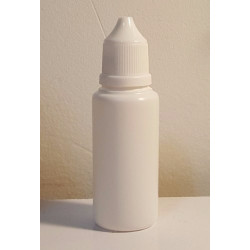
Quabain Tincture on WATERBASIS, w/o Alcohol 120ml superfiltered
 Security policy
(edit with the Customer Reassurance module)
 Delivery policy
(edit with the Customer Reassurance module)
 Return policy
(edit with the Customer Reassurance module)
QUABAIN
G-strophanthin
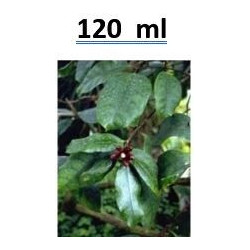
(Strophanthus gratus)
ON WATERBASIS
(almost) without Alcohol
superfiltered
120ml
USAGE
Shake before use !!
10 drops on the tongue. 3 times a day.
You can mix up with some water.
Hold it in the mouth for 1-2 minutes.
Absorption works by mouth mucosis.
Only swallow after this period.
Take this 30 min after or before the meals.
Same strength and efficiency as the alcohol-based one.
"All truth passes through three stages. First, it is ridiculed. Second, it is violently opposed.Third, it is accepted as being self evident",
Arthur Schopenhauer
STROPHANTIN D1
Strophantus gratus
superfiltered
strong, fresh and active!
Other names:
strophantin, strophantus gratus, strodival, kombetin, Ouabain, Acocantherin, Astrobain, G-Strophicor, Gratibain, Gratus, Strophanthin, Kombetin, Purostrophan, Rectobaina, Solufantina, Strodival, Strophalen, Strophoperm, Strophosan, Uabaina, Uabanin
120 ml
STROPHANTINA new approach for heart diseaseCoronary artery disease is currently the leading cause of death in the United States. Despite the increasing sophistication of surgical techniques, the introduction of new techniques such as balloon angioplasty, and a number of new drugs (e.g. beta blockers, calcium antagonists), it is estimated that over 1 million heart attacks will occur this year, resulting in 500,000 deaths. In short, we do not have an adequate therapeutic solution to the problem of myocardial infarction (heart attack).The cornerstone of therapy for treatment and prevention of myocardial infarction is to remove blockages in coronary arteries that are thought to be the cause of the infarction. This adheres to the widely accepted coronary artery thrombosis theory of infarction; that is, arteries become clogged with plaque, damaged from such things as smoking or high cholesterol. A clot forms a fissure in the plaque. The clot may shut off the blood flow of the coronary artery, causing a heart attack. It is deceptively simple: The coronary arteries are clogged. No blood can flow, so the muscles of the heart cannot be supported, and heart metabolism stops, leading to death.In Germany, another theory of myocardial infarction has been proposed by Dr. Berthold Kern (1911-1995). Dr. Kern, while performing autopsies in Germany in the 1930s and 1940s, observed that the findings of these autopsies did not corroborate the coronary obstruction hypothesis. He began researching the literature, looking for clues as to an alternative etiology. What he found was not only a new theory that may provide the missing piece of the coronary obstruction theory, but a therapy now being used by over 5000 physicians in Germany with reportedly remarkable success.Dr. Kern’s claims, as set forth in his 1971 informational paper, Three Ways to Cardiac Infarction, can be summarized as follows:1. The coronary obstruction theory cannot adequately explain observed facts.2. The major etiologic factor underlying myocardial infarction is a primary chemical destructive process, cause by unchecked metabolic acidosis (accumulation of acid) in the left ventricular tissue and substantially unrelated to coronary artery disease.3. The regular, clinical use of oral g-strophathin (a cardiac glycoside derived from the West African plant strophanthus gratus):Prevents lethal myocardial tissue acidosis, and therebySubstantially reduces the incidence of myocardial infarction and completely prevents infarction deaths.Dr. Kern’s observations that most myocardial infarctions occur in patients without significant obstruction of the coronary artery supplying the infracted tissue finds great support in the American peer-reviewed literature. Since 1948, over a dozen reports of post-mortem examination of infracted hearts have consistently failed to corroborate the coronary artery thrombosis theory of myocardial infarction. That is, victims of fatal heart attacks have had no evidence whatsoever of coronary occlusion.An example of the degree of non-confirmation can be ascertained by the following quote from a 1980 article on Circulation:“These data support the concept that an occlusive coronary thrombus has no primary role in the pathogenesis of a myocardial infarct.” The reviewer went on to note, “These reports also present clear refutation of the most common explanation used today to dismiss autopsy findings which detect no coronary thrombi, i.e. that thrombi existed at infarction but have since lysed, embolized or washed away.”There does not appear to be any literature that effectively refutes these autopsy findings.Another source of inconsistent data are the many reports in the literature of myocardial infarction in patients without coronary artery disease, as deduced by normal coronary angiograms. Other autopsy data has revealed widely scattered areas of necrotic tissue that produces a substantial incongruence between the area of infarction and the arterial supply.In a 1988 editorial published in the New England Journal of Medicine titled “Twenty years of coronary bypass surgery,” Thomas Killip observed that “Neither the VA [Veterans' Administration] nor CASS [the National Institute of Health's Coronary Artery Surgery Study] has detected a significant difference in long-term survival between the two assigned treatment groups [surgical vs. medical] when all patients have been included…”More recent work with coronary angioplasty and anti-thrombolytic agents has also failed to demonstrate any clear cut improvements in survival.Dr. Kern went a step further. In his review of the literature, he came across the notion of collaterals (or anastomoses), a finely-meshed network of small blood vessels that act as natural bypass channels in the heart muscle. These collaterals have been made visible by Professor Giorgio Baroldi in studies at the Armed Forces Institute of Pathology.Baroldi developed a technique for filling the arteries of the heart with artificial blood, a chemical substance that thickens in the blood vessels. When later the tissues were dissolved in acid, the entire structure of blood vessels in the heart was revealed. Kern hypothesized that bypass grafts were created naturally by the body via the collaterals whenever a coronary artery became blocked. Therefore, heart bypass would be redundant to a large degree.A study by Rentrop et al in the April 1, 1988 issue of The American Journal of Cardiology has produced results completely at odds with the coronary artery blockage theory, and consistent with Kern’s hypothesis. In an accompanying editorial, Dr. Stephen Epstein of the National Heart, Lung and Blood Institute summarizes Rentrop and colleagues’ “extremely important observations.” They found that in an advanced state of the narrowing of the coronary arteries, the supply of blood to the heart muscles is fully assured via collaterals that enlarge naturally in response to the blockage. Interestingly, they observed that the more the coronaries narrow, the less danger there is of heart infarction.Dr. Kern’s second claim, i.e. his proposed new theory of metabolic acidosis, can be summarized as follows: Metabolic conditions in the most healthy of hearts are, at best, marginal in the constantly beating left ventricle. This is the part of the heart responsible for pumping blood to most of the body, the right ventricle merely supplying the lungs. Oxygen and energy requirements are always perilously close to available supplies, and any of the several stressors may cause an oxygen/energy deficit, with deterioration in oxidative metabolism, and consequent development of acidosis. Lack of oxygen sets off the process of zymosis or fermentation metabolism, an anaerobic process, in order to produce energy in the cells. This, in turn, lowers the pH.This lowering of the pH sets off a destructive chemical process, literally a suicide reaction of the cell. Lysozymal enzymes are released, causing cell self-digestion. This starts as a single point in the muscle, then many points, which eventually join to form a small area of necrotic tissue. Finally, a critical mass is reached, no bigger than the head of a pin, which triggers larger and larger areas of damaged tissue, resulting in infarction (heart attack).Ideally then, the remedy to address infarction would be a restoration of pH balance to the heart muscle, thereby preventing tissue damage and fatal infarction. The problem Kern faced was how to accomplish this without causing positive inotropy [increasing the strength of the muscular contraction], i.e. without putting further stress on the contracting heart muscle itself. The cardiac glycosides, including digitalis and the strophanthin byproduct known as ouabain, are known to produce such a deleterious effect, and this is why they are not effective against infarction.
Quabain Tincture on WATERBASIS, w/o Alcohol 120ml superfiltered